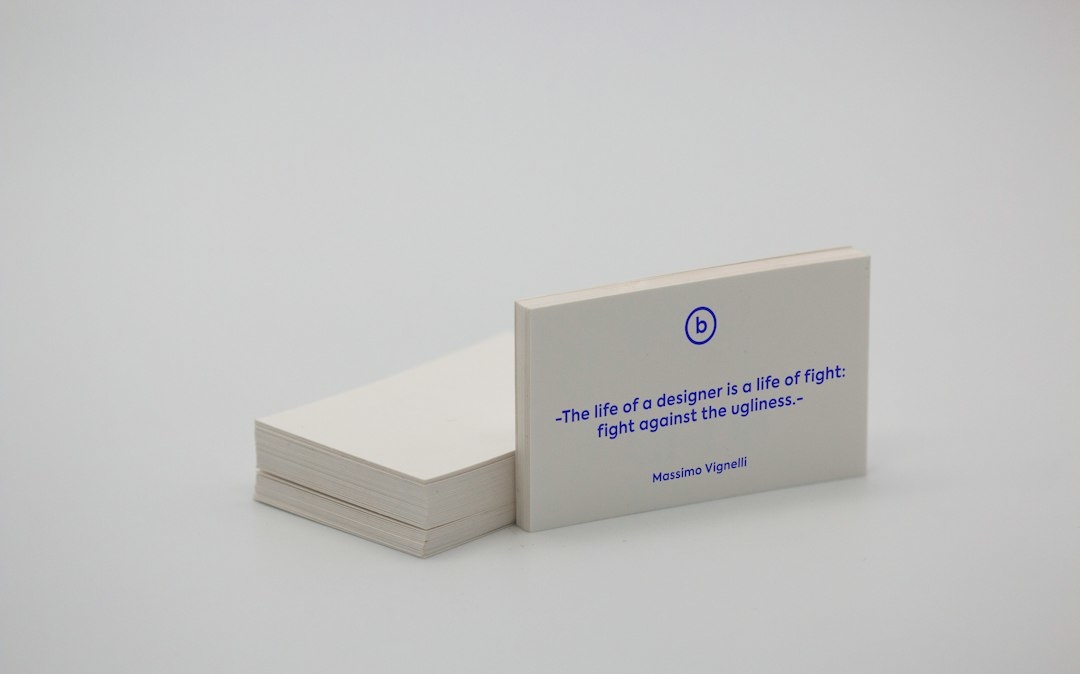
How to Design Business Cards That Get Kept
Contents:
- Problem Statement
- Why Solve It
- Step-by-Step Solution
- Expert Quote
- Seasonal Timeline Consideration
- Examples
- Troubleshooting
- FAQ
- What size should a standard business card be?
- Should I include a QR code on my business card?
- How much does professional business card printing typically cost?
- Common Mistakes to Avoid
- Comparison With a Commonly Confused Alternative
What separates a business card that lands in someone’s wallet for months from one tossed the moment its owner walks away? The answer has far less to do with clever slogans than most people assume.
Problem Statement
Most business cards get discarded within a day of receiving them, meaning the substantial cost and effort of printing and distributing cards often generates minimal actual return for many businesses.
Why Solve It
A card people genuinely keep, whether for its usefulness, memorability, or design quality, extends your brand’s presence in a potential client’s daily life far longer than a card immediately discarded.
Step-by-Step Solution
Start with a clear hierarchy: your name and business name should be the most visually prominent elements, followed by your specific service or specialty, then contact information positioned for easy scanning.
Choose a card stock heavier than standard printer paper; 16pt to 32pt cardstock feels noticeably more substantial and signals quality compared to the flimsy cards many competitors distribute.
Add genuine utility beyond contact information, such as a small useful reference on the back, like a size chart for a tailor or a measurement conversion for a contractor, giving recipients a practical reason to keep the card accessible.
Limit your color palette to two or three colors matching your broader brand identity, since overly busy designs read as unprofessional and are harder to scan quickly.
Expert Quote
“The cards people keep are the ones that solve a small problem or spark genuine curiosity,” says Rebecca Hahn, a branding consultant who has designed print materials for over 300 small businesses. “A card with only contact information is competing against dozens of others doing exactly the same thing.”
Seasonal Timeline Consideration
Industry trade shows and networking events cluster heavily in spring and early fall, making late winter the ideal time to finalize and order a card redesign before the busiest networking season begins.
Examples
A personal trainer in Milwaukee designed cards doubling as a punch card for a free session after ten visits, dramatically increasing the rate at which recipients kept and eventually used the card.
Troubleshooting
If your current cards aren’t generating follow-up contact, test a small batch redesign with a QR code linking directly to your booking page, making the next step frictionless for interested recipients.
FAQ
What size should a standard business card be?
The standard US business card size is 3.5 by 2 inches, though slightly non-standard sizes can help a card stand out if budget allows for custom printing.
Should I include a QR code on my business card?
Yes, a QR code linking to your website or booking page bridges the physical card to a digital action, significantly improving conversion from a kept card to an actual inquiry.
How much does professional business card printing typically cost?
Quality cards with premium stock typically run $30 to $100 for a batch of 250 to 500, depending on finish and paper weight chosen.
Common Mistakes to Avoid
Cramming too much information onto a small card makes it harder to scan quickly, while using overly small font sizes below 8 points forces recipients to squint, both reducing the likelihood the card gets used later.
Comparison With a Commonly Confused Alternative
Digital business cards, shared via QR code or NFC tap, differ from physical cards in that they can’t be physically “kept” in a wallet, though they offer easy contact-saving convenience that some networking situations favor over traditional print.